How to calculate protein, fat and carbs
A simple guide to calculating your macros and reaching your goals
What are macros?
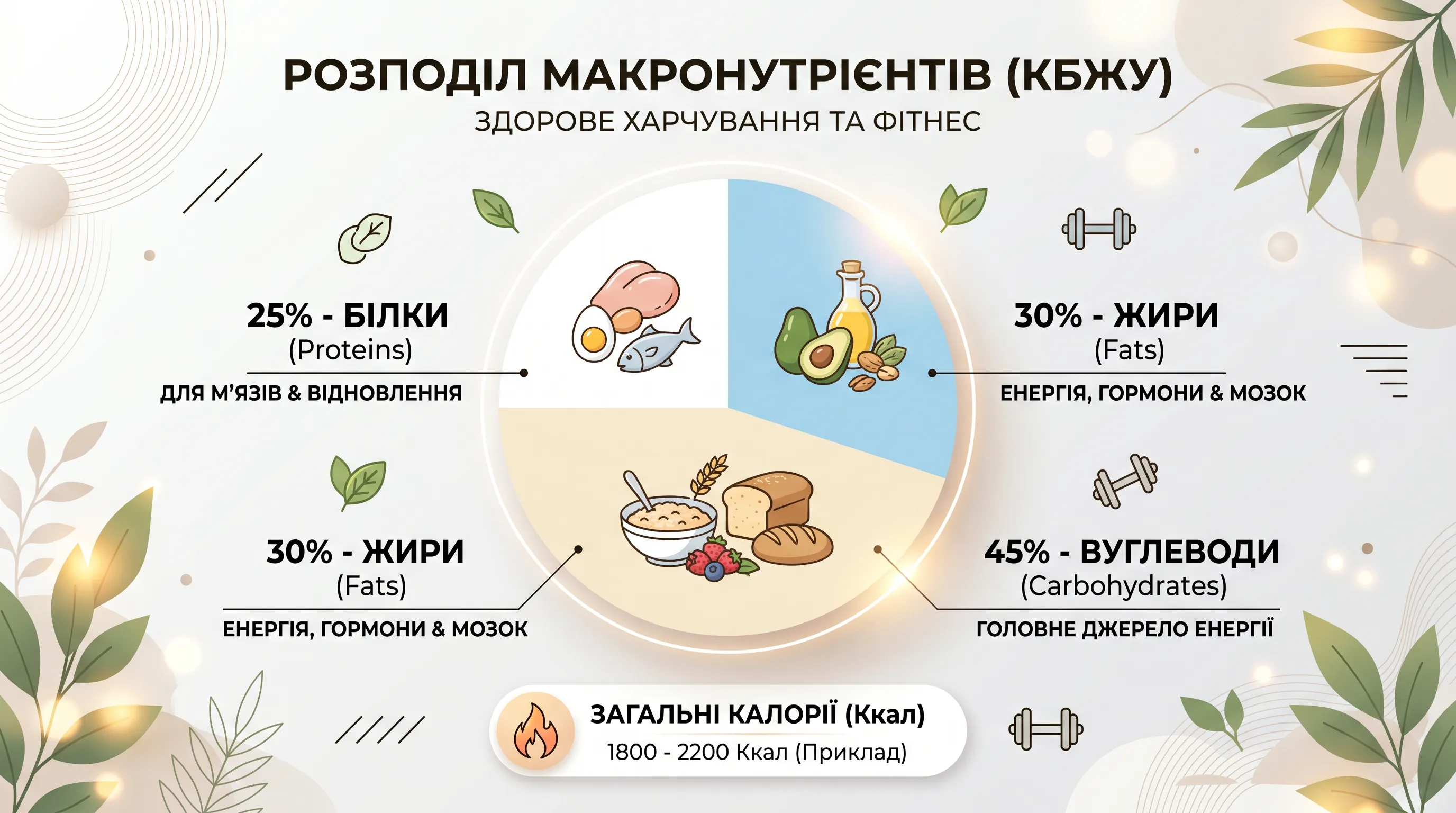
Macros (macronutrients) are protein, fat and carbohydrates — together they make up your daily calories. Your body needs them to function normally, produce energy and build tissue.
Knowing how to calculate and track your macros is the foundation of any effective nutrition plan — whether your goal is losing fat, building muscle or simply keeping healthy habits.
How to calculate your calories
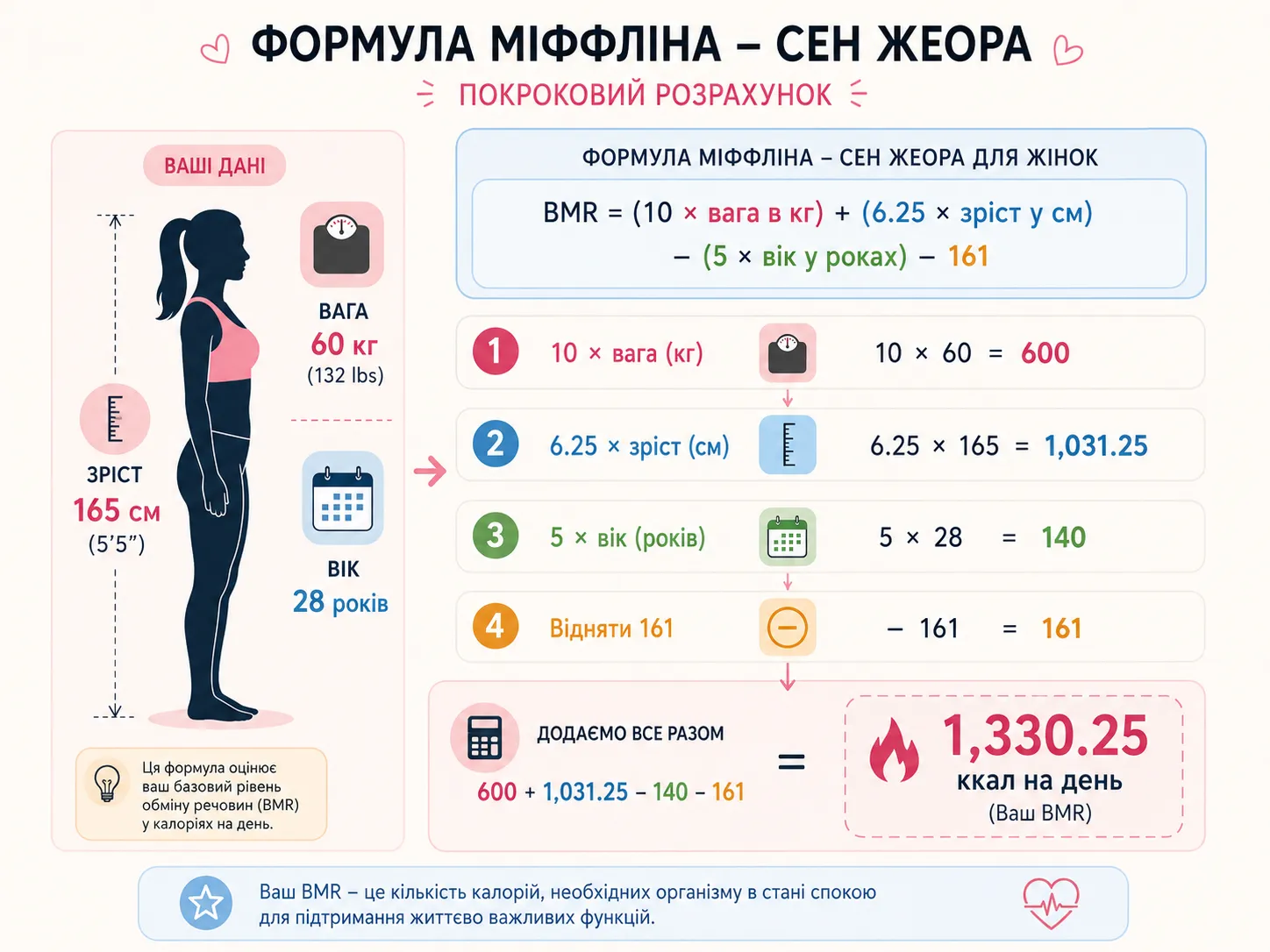
The first step is working out your daily calorie needs. For this we use the Mifflin–St Jeor equation, considered one of the most accurate.
Formula for men:
BMR = 10 × weight (kg) + 6.25 × height (cm) - 5 × age (years) + 5
Formula for women:
BMR = 10 × weight (kg) + 6.25 × height (cm) - 5 × age (years) - 161
BMR is your basal metabolic rate — the number of calories your body burns at rest.
Then multiply your BMR by an activity factor:
- Sedentary lifestyle: BMR × 1.2
- Light activity (training 1-3 times a week): BMR × 1.375
- Moderate activity (training 3-5 times a week): BMR × 1.55
- High activity (intense training 6-7 times a week): BMR × 1.725
- Very high activity (professional sport): BMR × 1.9
Example: a woman, 30 years old, 65 kg, 170 cm tall, moderately active.
BMR = 10 × 65 + 6.25 × 170 - 5 × 30 - 161 = 1521 kcal
Daily calories = 1521 × 1.55 = 2357 kcal
How to calculate protein
Protein is the building material for muscle, skin, hair and other tissue. It also helps you feel full for longer.
Protein targets by goal:
- Weight loss: 1.6 - 2.2 g per kg of body weight
- Maintenance: 1.2 - 1.6 g per kg of body weight
- Muscle gain: 1.6 - 2.2 g per kg of body weight
Example: for a 65 kg woman aiming to lose weight: 65 × 2 = 130 g of protein a day.

How to calculate fat
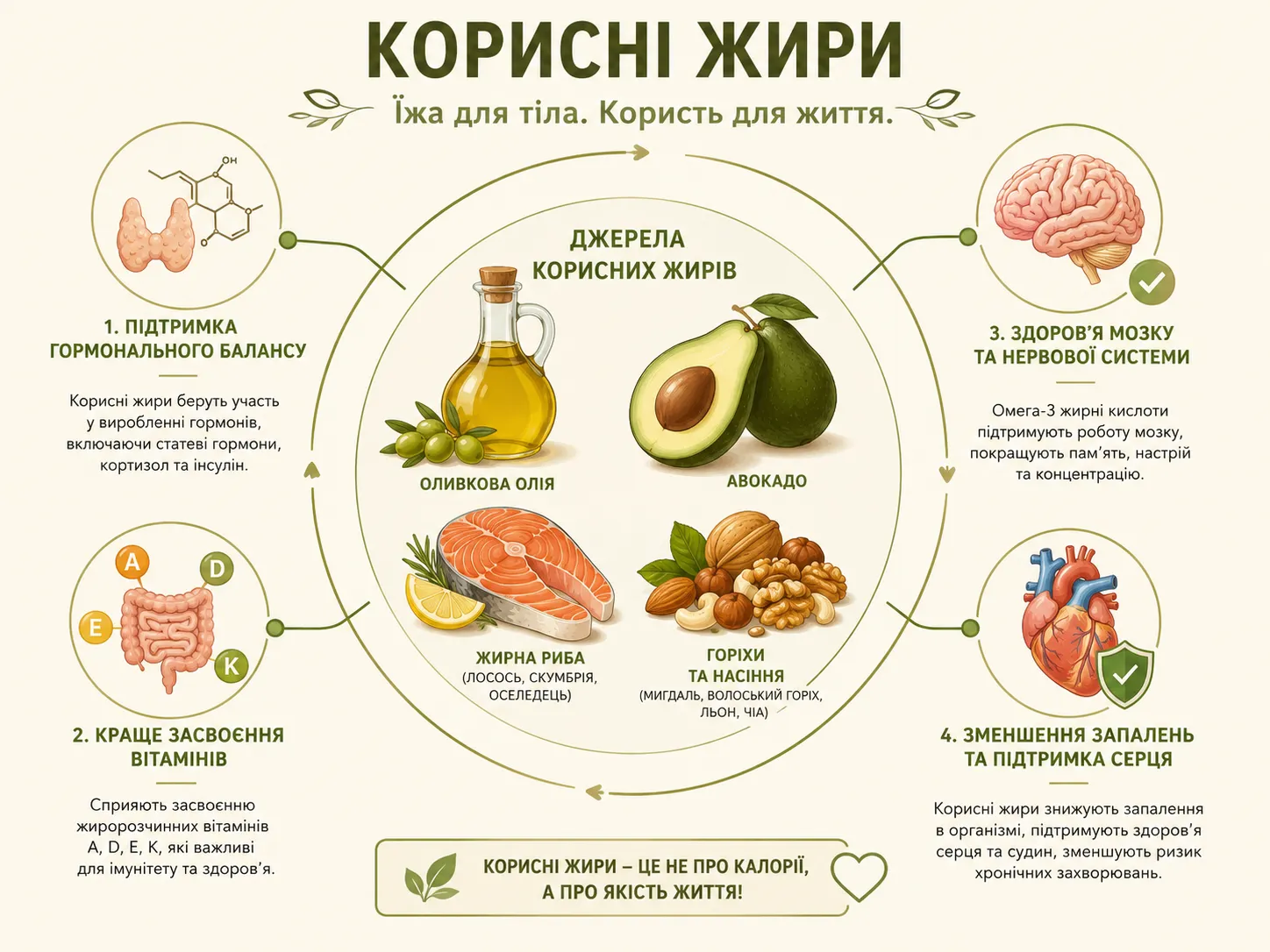
Fat often gets an unfairly bad reputation on diets, but you need it for:
- Absorbing fat-soluble vitamins (A, D, E, K)
- Hormone production
- Brain and nervous system health
- Reducing inflammation in the body
Recommended fat intake:
0.8 - 1.2 g per kg of body weight
Or 20-35% of total calories
Example: for a 65 kg woman: 65 × 1 = 65 g of fat a day.
1 g of fat = 9 kcal, so 65 g × 9 = 585 kcal from fat.
How to calculate carbs
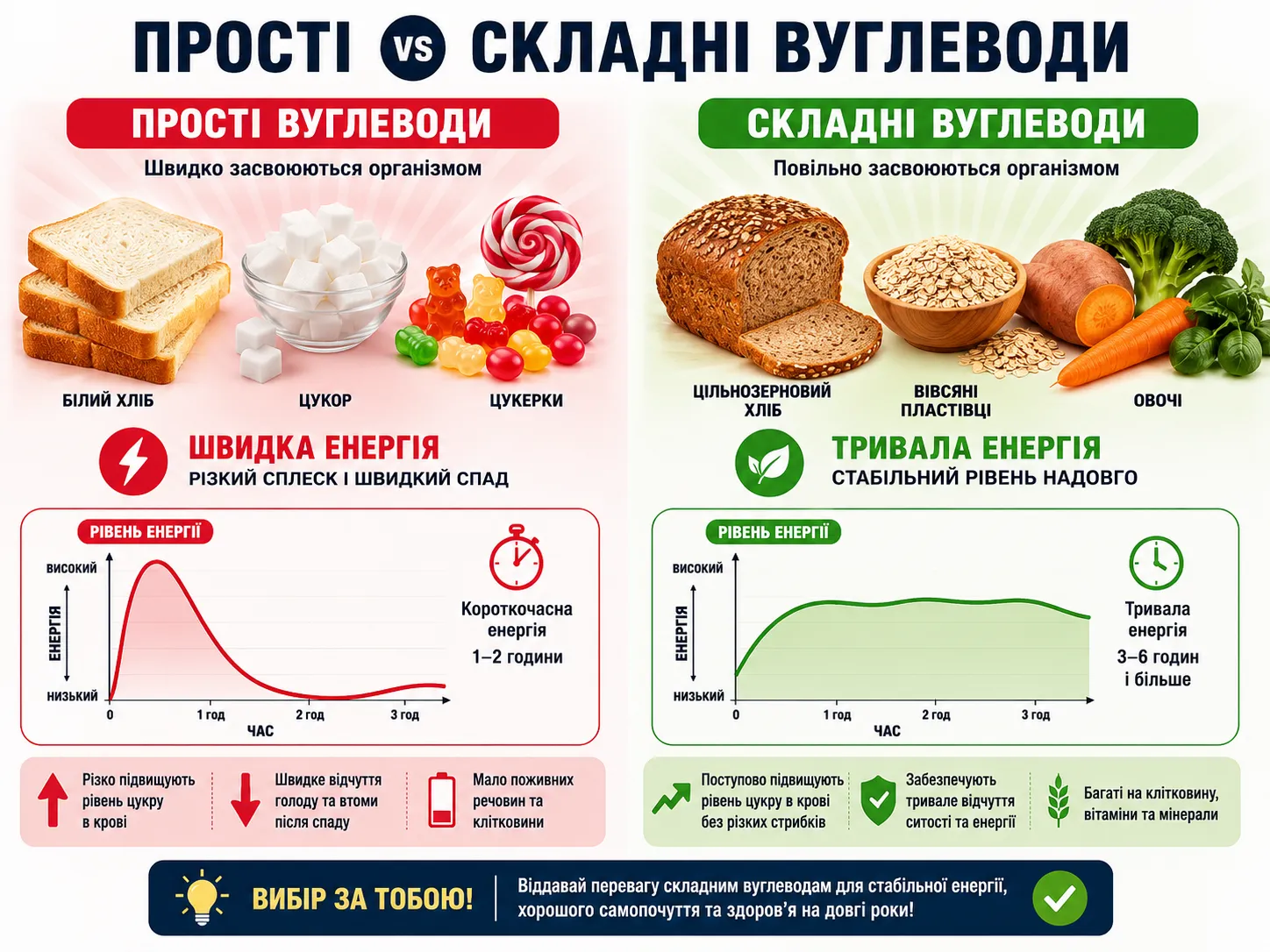
Carbohydrates are the main source of energy for your brain and muscles. It's important to choose the "right" carbs — complex ones with a low glycaemic index.
Calculating carbs:
Whatever calories remain after protein and fat go to carbs.
Carb kcal = Total kcal - (protein kcal) - (fat kcal)
Note: 1 g of carbohydrate = 4 kcal
Calculation for our example:
- Total calories: 2357 kcal
- Protein: 130 g × 4 kcal = 520 kcal
- Fat: 65 g × 9 kcal = 585 kcal
- Carbs: 2357 - 520 - 585 = 1252 kcal
- 1252 kcal ÷ 4 = 313 g of carbs
So with moderate activity this woman should eat roughly 2357 kcal, 130 g protein, 65 g fat and 313 g carbs a day to maintain her current weight.
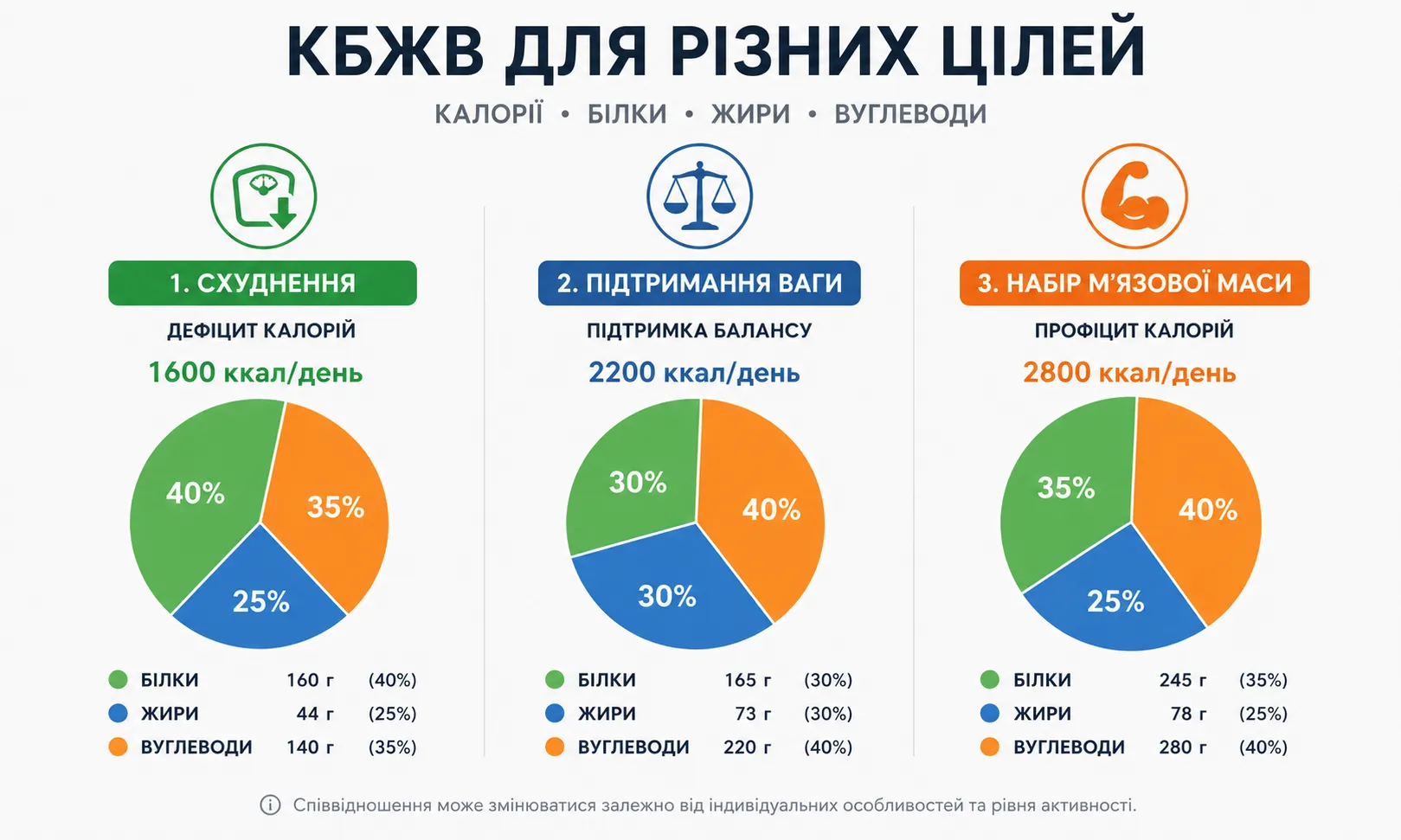
How to adjust your macros for your goal
For weight loss
Calorie deficit: eat 300–500 kcal below your calculated needs
Protein: go to the upper end (2 g per kg) — it helps preserve muscle
Fat:keep it at least 0.8 g per kg — it's essential for hormones and health
For muscle gain
Calorie surplus: add 200–400 kcal to your calculated needs
Protein: 1.8–2.2 g per kg for muscle growth
Carbs: increase them to fuel your workouts
For maintenance
Calories: stick to your calculated needs
Protein: 1.2–1.6 g per kg
Split: choose whatever you enjoy — hitting your targets is what matters
Practical tips
- Use a calculator.There's no need to do the maths by hand — my online calculator will do it for you.
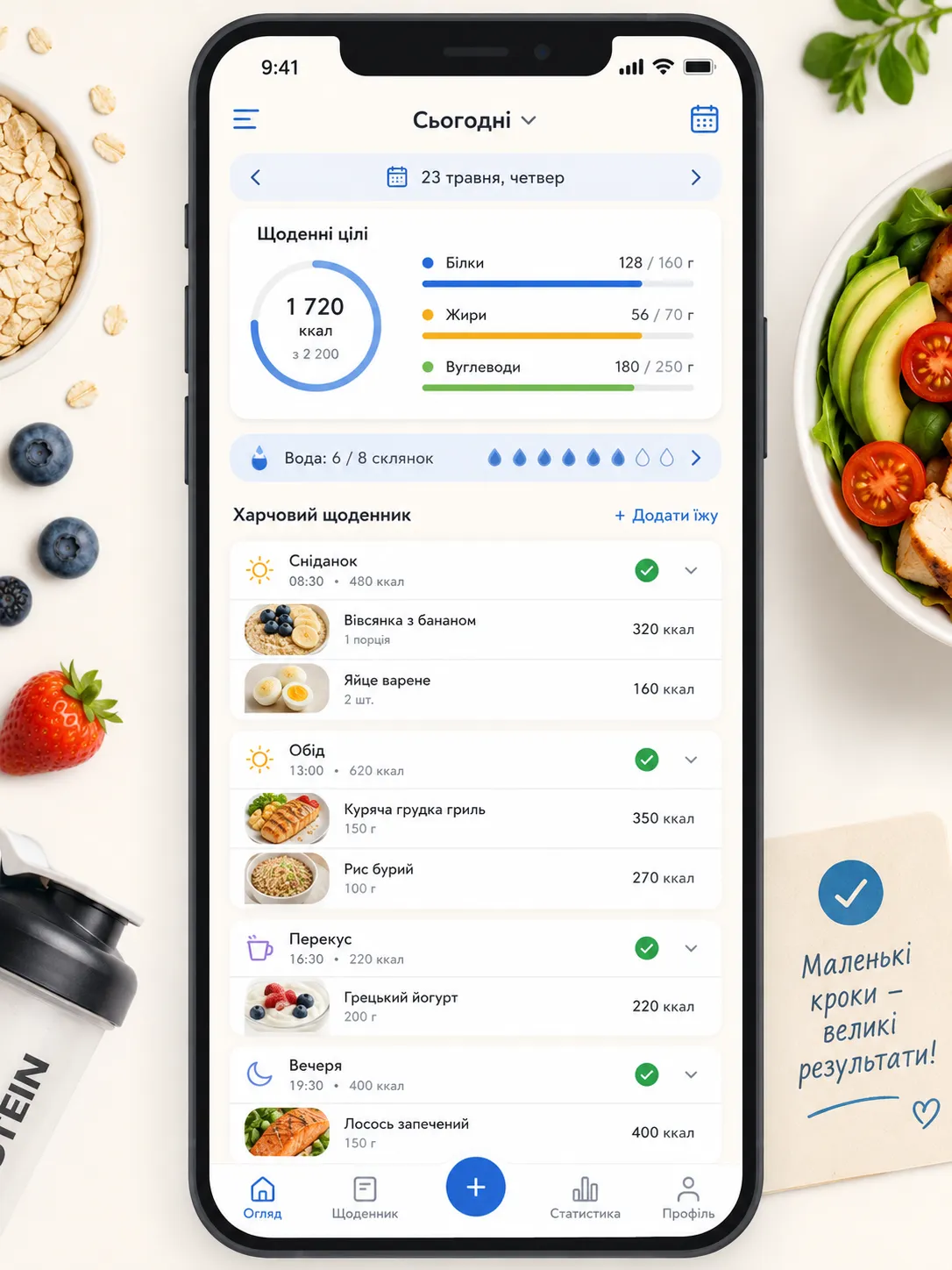
- Track what you eat. In a notebook or an app — it shows how close you are to your targets.
- Adjust based on results.If your weight hasn't changed in 2–3 weeks, adjust calories by ±100–150 kcal.
- Don't forget food quality. Macros are the foundation, but quality matters too. Choose whole foods rich in micronutrients.
- Be consistent.Results come from regularity, not perfection. One off day won't ruin your progress.
Conclusion
Calculating macros isn't an exact science — it's a tool that helps you understand how much to eat to reach your goals. Every body is different, and what works for one person may not work for another.
As a personal trainer, I help each client find their own formula — taking into account not just the numbers, but their health, food preferences and the reality of everyday life. If you'd like an individual plan that works for you, get in touch.
Need a personalised programme?
Calculating macros is only the beginning. For lasting results you need a nutrition and training plan tailored to you.